Choosing the right bathroom tile is a foundational step in creating a durable, beautiful space. This guide covers choices in materials, installation considerations, design tips, and maintenance to help homeowners and professionals ensure long-lasting results.
Why bathroom tile matters
In wet environments, tile acts as a waterproof barrier, provides traction, and sets the tone of design. The right tile resists moisture, cleans easily, and remains beautiful for years.
Common tile materials
Porcelain vs ceramic
Porcelain (dense, low porosity) is ideal for floors and wet areas. Ceramic tiles are softer, lighter, and less expensive, suitable for walls or backsplashes. Both need proper sealing when recommended, and both come in a wide range of patterns.
Natural stone considerations
Marble, travertine, or slate offer natural aesthetics but require periodic sealing and maintenance. They can stain or etch from acidic cleaners, so choose based on lifestyle.
Glass and mosaic tiles
Glass tiles create reflections and color depth but can be slippery in some finishes; they’re common in walls and accents. Mosaic sheets are easy to install and can help create unique patterns but may require careful grouting to avoid grout haze.
Design and layout ideas
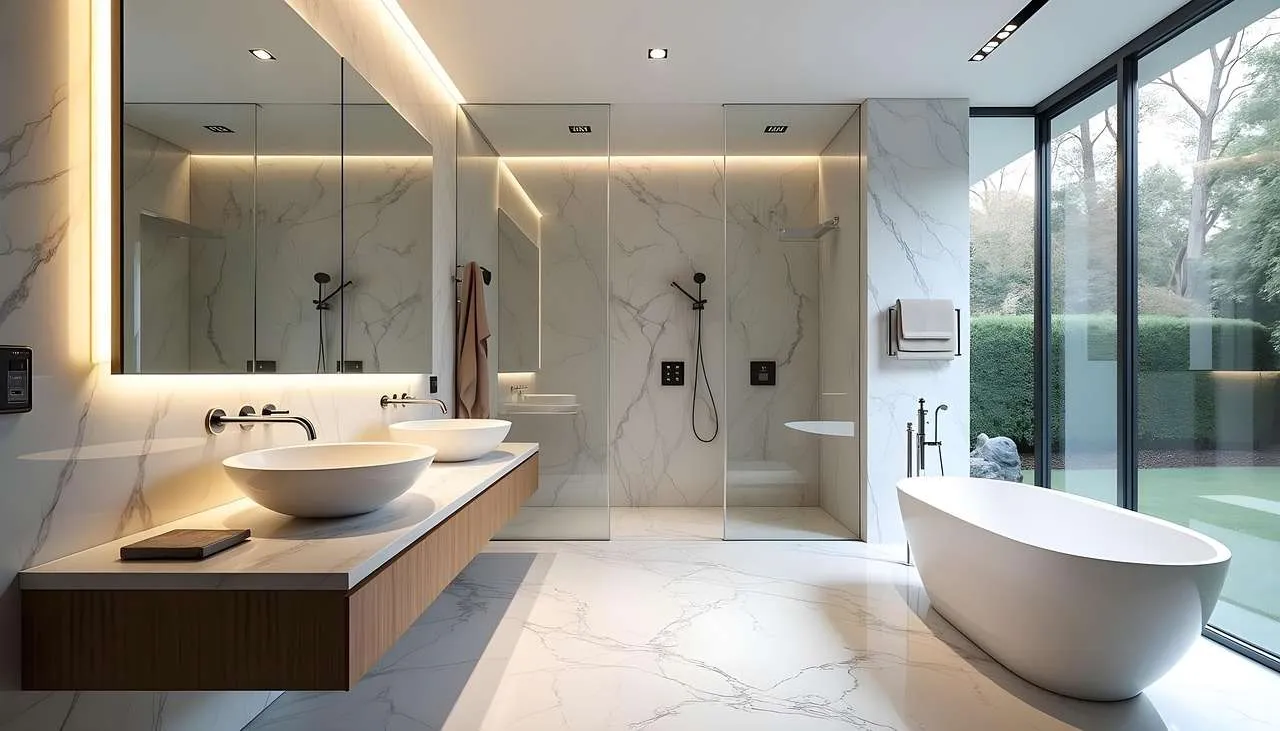
Plan with the tile size and layout in mind. Large-format porcelain tiles create a seamless look with fewer grout lines; smaller tiles work well for shower niches and mat-free floors. Consider grout color: a contrasting grout highlights texture, while a match blends the surface for a cleaner appearance.
- Coordinate tile with vanity and countertops
- Use accent bands or mosaics to delineate zones
- Mix texture to add depth (matte floors, glossy walls)
Installation and maintenance tips
Preparation matters: ensure a flat substrate, proper waterproofing, and a level layout before setting tile. For DIY projects, start with smaller rooms and practice with a spare tile. Regular maintenance includes sweeping, wiping spills, and using pH-neutral cleaners to protect grout and tile surfaces.
- Use a quality thin-set mortar suitable for bathrooms
- Seal natural stone and grout as advised by manufacturers
- Repair chips or cracking promptly to prevent water intrusion
Tile comparison
| Material | Durability | Slip resistance | Maintenance | Cost per sq ft | Best for |
| Porcelain tile | Very high | High (slip varies by finish) | Low to moderate | 2–15 | Floors and wet areas |
| Ceramic tile | Moderate | Moderate | Low | 1–8 | Walls, light floors |
| Natural stone | Varies (hard stone high; soft stone moderate) | Ranging | High (sealing required) | 5–25 | Accent walls, showers |
| Glass tile | Moderate | High gloss may be slippery | Moderate | 7–20 | Backsplashes, features |
Cost and value
Material choice drives upfront cost and long-term value. Porcelain and large-format tiles reduce grout and maintenance, while natural stone offers luxury at a premium. Don’t forget installation costs, waterproofing, and potential remediation if old substrate needs repairs. For best results, hire an experienced installer and request a written warranty for materials and workmanship.
In addition to price, consider installation timeline, tile availability, and return policies. Budget for extra tiles for cuts and replacements. Selecting reputable brands with consistent colors and proven performance helps ensure that bathroom tile remains beautiful for years to come.
Conclusion, a thoughtful tile choice balances function and aesthetics. By understanding material traits, layout options, and care needs, you can achieve a durable, stylish bathroom that stands up to moisture and daily use.